
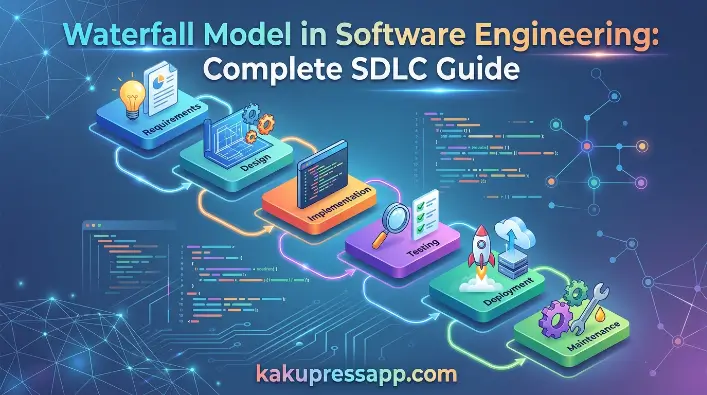
Welcome to kaku press app. Software development requires a structured approach to plan, design, build, test, and maintain applications effectively. Different software development methodologies help teams manage projects based on their requirements, complexity, and goals. One of the oldest and most widely discussed approaches is the waterfall model in software engineering, which follows a sequential process where each development phase is completed before moving to the next.
The waterfall model in software engineering is known for its simple structure, detailed documentation, and step-by-step workflow. Although modern approaches like Agile have become popular, the Waterfall methodology is still useful for projects with clearly defined requirements, strict regulations, and predictable outcomes.
What Is the Waterfall Model in Software Engineering?
The waterfall model in software engineering is a traditional software development life cycle (SDLC) model where development activities are performed in a fixed sequence. In this approach, a project moves through different phases one after another, similar to water flowing downward through a waterfall. Unlike Agile development, where teams continuously improve software through short iterations, the Waterfall model requires completing one phase before starting the next. For example, developers cannot begin coding until requirements analysis and system design are completed. The main idea behind the Waterfall methodology is proper planning before execution. Teams spend significant time understanding requirements, preparing documentation, designing the system, and then moving toward implementation and testing.
History and Evolution of the Waterfall Model
The Waterfall model was introduced in the 1970s as a formal software development approach inspired by traditional engineering processes. It follows a structured, step-by-step method where each phase of software development, such as requirements analysis, design, coding, testing, deployment, and maintenance, is completed before moving to the next stage. This approach emphasizes detailed planning, documentation, and careful management to reduce errors and improve project control.
As software projects became more complex, developers realized that the Waterfall model was not flexible enough to handle frequent changes in requirements. This limitation led to the development of Agile methodologies, which allow continuous feedback and improvements throughout the project. However, the Waterfall model is still widely used in industries like healthcare, banking, and government projects where strict planning, security, compliance, and documentation are more important than frequent changes.
Read Also: Archana Software Share Price: Analysis, Financial Performance & Investment Guide
Phases of the Waterfall Model in Software Engineering
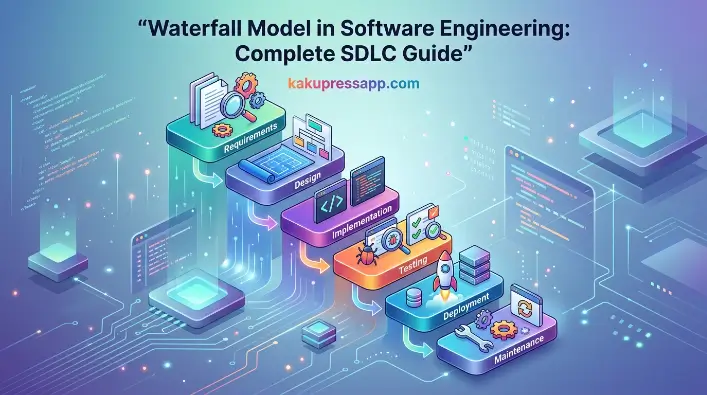
The Waterfall methodology follows a fixed sequence of development phases, where each phase has a specific purpose and goal. A team must complete one phase before moving to the next, ensuring that all requirements, designs, and tasks are properly planned and documented. For example, developers first analyze requirements, then design the system, write code, test the software, and finally deploy and maintain it. Each phase produces specific results called deliverables, which help track the progress of the project. This structured approach makes project management easier because team members clearly understand their responsibilities and the expected outcomes at every stage. It is especially useful for projects where requirements are well-defined, and changes are limited.
Requirements Analysis Phase
The first phase focuses on collecting and analyzing all project requirements. Developers, business analysts, and stakeholders work together to understand what the software should accomplish. This structured approach makes project management easier because team members clearly understand their responsibilities and the expected outcomes at every stage. It is especially useful for projects where requirements are well-defined and changes are limited. During this stage, teams create detailed requirement documents that define:
- Software features
- User expectations
- System limitations
- Business goals
- Technical requirements
A complete requirement analysis phase reduces confusion during later stages because developers have a clear understanding of project expectations.
System and Software Design Phase
After requirements are finalized, the project moves into the design phase. Developers create the overall architecture and technical structure of the software. This structured approach makes project management easier because team members clearly understand their responsibilities and the expected outcomes at every stage. It is especially useful for projects where requirements are well-defined and changes are limited.
This phase includes:
- System architecture design
- Database planning
- User interface design
- Software components planning
- Technology selection
The goal is to create a detailed blueprint that guides developers during implementation.
A well-prepared design helps reduce development errors and improves software quality.
Implementation and Coding Phase
During the implementation phase, developers start writing the actual code based on the approved design documents. This structured approach makes project management easier because team members clearly understand their responsibilities and the expected outcomes at every stage. It is especially useful for projects where requirements are well-defined and changes are limited.
The development team focuses on:
- Creating software modules
- Following coding standards
- Integrating different components
- Reviewing code quality
Because requirements and designs are already finalized, developers can work according to a predefined plan.
Testing Phase
After coding is completed, the software enters the testing phase. This structured approach makes project management easier because team members clearly understand their responsibilities and the expected outcomes at every stage. It is especially useful for projects where requirements are well-defined and changes are limited. Quality assurance teams evaluate the application to identify errors, security issues, and performance problems.
Testing activities may include:
- Unit testing
- Integration testing
- System testing
- User acceptance testing
The goal is to ensure that the final software meets the original requirements. One limitation of the Waterfall approach is that testing happens relatively late, which can make fixing major issues more difficult.
Deployment Phase
Once testing is successfully completed, the software is deployed for users. This structured approach makes project management easier because team members clearly understand their responsibilities and the expected outcomes at every stage. It is especially useful for projects where requirements are well-defined and changes are limited.
Deployment activities include:
- Installing the software
- Configuring systems
- Migrating data
- Training users
At this stage, the completed product becomes available in the production environment.
Maintenance Phase
The final phase involves maintaining and improving the software after release. This structured approach makes project management easier because team members clearly understand their responsibilities and the expected outcomes at every stage. It is especially useful for projects where requirements are well-defined and changes are limited.
Maintenance activities include:
- Fixing bugs
- Updating features
- Improving performance
- Addressing security issues
Although development is complete, ongoing maintenance ensures that the software continues working effectively.
Characteristics of the Waterfall Methodology
The Waterfall model has several unique characteristics that separate it from modern software development approaches like Agile. It follows a linear and sequential process, meaning each phase must be completed before the next phase begins. This makes the development process more structured and predictable because teams follow a predefined plan from start to finish. Unlike flexible methodologies, the Waterfall model focuses heavily on detailed planning, documentation, and fixed requirements. Changes are usually difficult to make once a phase is completed. These characteristics make Waterfall suitable for projects where requirements are clear, stable, and require strong control, such as government, banking, and healthcare software systems.
Sequential Development Process
The project follows a fixed order: Sequential Development Process means that the Waterfall model completes software development in a fixed order, one phase at a time. The team must finish the current phase completely before starting the next phase. Each stage depends on the previous stage, so developers cannot usually begin coding until requirements and system design are finalized.
- Requirements
- Design
- Development
- Testing
- Deployment
- Maintenance
Each stage depends on the completion of the previous stage.
Extensive Documentation
Documentation is one of the most important parts of the Waterfall model because teams create detailed records at every stage of software development. These documents include project requirements, system designs, coding plans, testing procedures, and maintenance guidelines. Since each phase depends on the previous one, proper documentation ensures that everyone understands what has been completed and what needs to be done next.
Detailed documentation also helps organizations maintain software after development is finished. If new developers join the project or the original team leaves, they can use these records to understand how the system works and make future updates more easily. This makes knowledge sharing and long-term software management more effective.
Fixed Requirements
The Waterfall model assumes that all project requirements can be clearly understood and documented at the beginning of the development process. This means the team should know what features, functions, and goals the software needs before development starts. Once the requirements are approved, the team follows the planned steps without expecting major changes.
This approach works well for projects where customer needs are clear and unlikely to change. However, if new requirements appear during development, making changes can be difficult because earlier phases may already be completed. This is why Waterfall is more suitable for projects with fixed and stable requirements rather than projects that need frequent updates.
Structured Management
This means that the Waterfall model makes it easier for managers to monitor and control a software project because each phase has clearly defined objectives and expected results. Since the development process follows a fixed sequence, managers can check whether a phase has been completed successfully before allowing the team to move to the next stage.
For example, after the requirements phase, managers can review the requirement document to confirm that all needs are identified. After the design phase, they can check system designs and plans. These clear milestones and deliverables help managers measure progress, identify problems early, and ensure that the project stays on schedule and within budget.
Advantages of the Waterfall Model
The Waterfall model offers several benefits that make it useful for certain types of software projects. Its structured and organized approach helps teams follow a clear development process from the beginning to the end. Because each phase has specific goals, requirements, and deliverables, project managers can easily monitor progress and ensure that tasks are completed properly. One of the main advantages of the Waterfall model is its focus on planning and documentation. By defining requirements and creating detailed plans before development begins, teams can reduce confusion and improve project control. It is especially effective for projects with fixed requirements, where changes are unlikely, and a predictable development process is needed. Industries such as healthcare, banking, and government often benefit from this approach because they require strong documentation, security, and compliance.
Easy to Understand and Manage
One of the major advantages of the Waterfall methodology is its simplicity and easy-to-understand structure. Since the development process is divided into clear phases, beginners, project managers, and stakeholders can easily understand how the project moves from one stage to another. The fixed sequence helps everyone know what tasks need to be completed and what results are expected at each phase.
Each phase has clearly defined goals and deliverables, which reduces confusion among team members and improves coordination. For example, during the requirements phase, the team focuses only on gathering and documenting requirements, while the design phase focuses on creating the system structure. This organized approach makes project management easier and helps teams maintain better control over the development process.
Clear Project Planning
Because everything is planned before development begins, organizations can estimate. Each phase has clearly defined goals and deliverables, which reduces confusion among team members and improves coordination. For example, during the requirements phase, the team focuses only on gathering and documenting requirements, while the design phase focuses on creating the system structure. This organized approach makes project management easier and helps teams maintain better control over the development process.
- Project costs
- Development time
- Required resources
- Team responsibilities
This makes Waterfall suitable for projects requiring predictable schedules.
Strong Documentation
This means that documentation helps teams manage and support software even after it has been developed. In the Waterfall model, every phase creates important documents, such as requirement reports, design plans, coding details, and testing results. These records act as a guide for developers when they need to fix errors, update features, or understand how the system was built.
Documentation is especially important in large organizations where many teams may work on the same software project. If a new developer joins the project, they can read the documents to understand the system without needing explanations from previous team members. It is also helpful in industries like healthcare, banking, and government, where companies must maintain proper records to follow security rules, legal requirements, and industry standards.
Suitable for Fixed Requirements
Projects with stable requirements can benefit from Waterfall because teams do not need to frequently modify plans. Each phase has clearly defined goals and deliverables, which reduces confusion among team members and improves coordination. For example, during the requirements phase, the team focuses only on gathering and documenting requirements, while the design phase focuses on creating the system structure. This organized approach makes project management easier and helps teams maintain better control over the development process.
Examples include:
- Government systems
- Banking applications
- Medical software
- Defense projects
Disadvantages of the Waterfall Model
Although the Waterfall model provides a structured and organized approach to software development, it also has some limitations. The biggest challenge is its lack of flexibility because the process follows a fixed sequence. Once a phase is completed, making changes becomes difficult and expensive, especially if new requirements appear later in the project. Another disadvantage is that customers have limited involvement during the development process. Users usually provide requirements at the beginning and see the final product near completion, which means problems or misunderstandings may not be discovered until late stages. Additionally, testing happens after the development phase, so finding major issues late in the project can increase the time, cost, and effort required to fix them. Because of these limitations, the Waterfall model is less suitable for projects where requirements frequently change or where continuous feedback is needed.
Difficulty Handling Changes
The biggest weakness of the Waterfall model is its lack of flexibility. Since the process follows a fixed sequence, completing one phase means moving forward without easily returning to make changes. If a team needs to modify requirements after a phase has been completed, it may require redesigning previous work, updating documents, and repeating certain activities, which increases both time and cost.
For example, if a customer requests a new feature after the development phase has started, developers may need to review the original requirements, change the system design, rewrite code, and perform additional testing. This can delay the project and affect the planned budget. Therefore, the Waterfall model is best suited for projects where requirements are clearly defined and unlikely to change during development.
Limited Customer Feedback
In the Waterfall model, customers are mainly involved during the initial and final stages of the project. At the beginning, they provide requirements and explain what they expect from the software. After development is completed, they review the final product. However, they usually do not participate regularly during the development process, which means developers have fewer chances to receive feedback and make improvements.
This limited customer involvement can create problems if the development team misunderstands user needs or if requirements change during the project. Since customers see the software only at the end, they may discover that the final product does not fully match their expectations. Fixing these issues at a later stage can require more time, effort, and cost compared to making changes earlier in development.
Late Testing Problems
In the Waterfall model, testing is performed only after the development phase is completed. This means developers may spend a lot of time building the software before discovering errors, design problems, or missing requirements. Since issues are found late in the project, they can be more difficult to fix because changes may affect already completed work.
For example, if testers discover a major problem after coding is finished, developers may need to modify the existing code, update documents, and repeat parts of the testing process. This requires additional time, effort, and resources, which can increase project costs and delay the final delivery. Therefore, late testing is considered one of the major limitations of the Waterfall approach.
Higher Risk for Complex Projects
Large and uncertain projects often face difficulties with the Waterfall model because their requirements may change as development progresses. In complex software projects, customers may discover new needs, technologies may change, or unexpected problems may appear during development. Since Waterfall follows a fixed sequence, making changes after completing a phase can be challenging and expensive.
Modern software environments usually require quick adaptation because businesses need to respond rapidly to market changes and user feedback. Flexible methodologies like Agile are often preferred for such projects because they allow continuous improvements, frequent updates, and regular customer involvement. Therefore, Waterfall is better suited for smaller or well-defined projects where requirements are stable from the beginning.
Waterfall Model vs Agile Methodology
Both Waterfall and Agile are popular software development approaches, but they follow different philosophies. Modern software environments usually require quick adaptation because businesses need to respond rapidly to market changes and user feedback. Flexible methodologies like Agile are often preferred for such projects because they allow continuous improvements, frequent updates, and regular customer involvement. Therefore, Waterfall is better suited for smaller or well-defined projects where requirements are stable from the beginning.
| Feature | Waterfall | Agile |
| Development Style | Sequential | Iterative |
| Requirements | Fixed at beginning | Can change frequently |
| Customer Feedback | Limited | Continuous |
| Testing | After development | Throughout development |
| Documentation | Extensive | Lightweight |
| Flexibility | Low | High |
| Best For | Predictable projects | Dynamic projects |
The Waterfall model is ideal when requirements are clear and unlikely to change. Agile is better for projects where continuous improvement and customer feedback are important.
When Should You Use the Waterfall Model?
The Waterfall methodology is suitable for projects where careful planning, detailed documentation, and predictable results are more important than flexibility and frequent changes. It works best when the project requirements are clearly defined before development begins, and the team can follow a fixed plan from start to finish.
Organizations should consider using the Waterfall model when the project has stable requirements, strict deadlines, regulatory requirements, or a need for extensive documentation. It is commonly used in industries where accuracy, security, and compliance are critical, such as healthcare, banking, government, and defense projects.
Requirements Are Clearly Defined
When customers have a clear understanding of their needs and requirements before development begins, the Waterfall model can provide a smooth and organized software development process. In this situation, the development team does not need to spend time making frequent changes or adjusting the project direction. Instead, developers can collect all requirements at the beginning, create detailed documentation, prepare a complete design, and follow a fixed plan throughout the project. This makes the development process more predictable because the team knows exactly what needs to be built and how it should work.
For example, suppose a company wants to develop a payroll management system with clearly defined features such as employee records, salary calculations, and report generation. Since the customer already knows what functions are required, developers can complete each Waterfall phase step by step: first analyzing requirements, then designing the system, coding the software, testing it, and finally deploying it. This reduces confusion, improves project control, and helps complete the software within the planned time and budget.
Projects Require Strict Compliance
Industries with legal or security requirements often prefer Waterfall because of its documentation and structured workflow. Since the customer already knows what functions are required, developers can complete each Waterfall phase step by step: first analyzing requirements, then designing the system, coding the software, testing it, and finally deploying it. This reduces confusion, improves project control, and helps complete the software within the planned time and budget.
Examples include:
- Healthcare systems
- Government software
- Financial applications
Changes Are Limited
Projects with stable goals and predictable outcomes are more suitable for the Waterfall model because the development team can create a complete plan before starting the work. When project requirements, objectives, and expected results are already clear, developers can follow the sequential phases of the waterfall model without needing frequent changes or adjustments.
For example, if an organization needs software with fixed features and a well-defined purpose, the team can complete requirements analysis, design, coding, testing, and deployment according to the original plan. This reduces uncertainty, makes scheduling easier, and allows managers to estimate costs and resources more accurately. However, if a project involves changing goals or uncertain requirements, a more flexible approach like Agile may be a better choice.
Real-World Examples of Waterfall Projects
Many large-scale projects have used Waterfall principles because they require careful planning and strict control. This reduces uncertainty, makes scheduling easier, and allows managers to estimate costs and resources more accurately. However, if a project involves changing goals or uncertain requirements, a more flexible approach like Agile may be a better choice.
Examples include:
Banking Software Systems
Financial applications often require a highly structured development process because they handle sensitive information such as customer accounts, transactions, and payment details. Before development begins, teams need detailed planning to define system requirements, security measures, and regulatory standards. The Waterfall model supports this approach by allowing developers to create complete documentation and follow a controlled development process.
Security reviews and compliance documentation are important in financial systems because organizations must follow strict rules to protect user data and prevent financial risks. For example, banking software requires careful planning, testing, and approval before release. The Waterfall model can be useful in such projects because its focus on documentation, planning, and clearly defined phases helps ensure that the software meets security and regulatory requirements.
Healthcare Applications
Medical software must meet strict regulations because it is used to support patient care, manage medical records, and sometimes control life-critical devices. Any error in the software could affect patient safety, so developers must carefully plan, design, test, and document every stage of the development process. Regulatory authorities also require organizations to maintain detailed records that show the software has been developed and tested according to established standards.
The Waterfall model is well-suited for medical software because it emphasizes detailed planning, comprehensive documentation, and a structured development process. Each phase is completed and reviewed before moving to the next, helping developers identify potential issues early and maintain compliance with healthcare regulations. This organized approach improves software quality, reduces risks, and ensures that the final product is reliable, secure, and safe for use in medical environments.
Government Projects
Government software projects often have clearly defined requirements, fixed budgets, strict deadlines, and detailed documentation standards before development begins. Since these projects are usually funded through contracts, all project objectives, features, and deliverables are agreed upon in advance. This makes the Waterfall model a suitable choice because it follows a structured, step-by-step process where each phase is completed according to the approved plan.
In addition, government organizations must follow strict policies, legal regulations, and security requirements. Detailed documentation is essential to demonstrate that the software has been developed according to these standards and to make future maintenance easier. The Waterfall model supports these needs by emphasizing thorough planning, proper documentation, and controlled project management, helping ensure that the software is delivered on time and meets all contractual and regulatory requirements.
Defense Systems
Defense-related software is used in critical systems such as military communication, surveillance, navigation, and weapon control, where even a small error can have serious consequences. Because these systems often handle sensitive and classified information, they require detailed planning, strict security measures, and comprehensive testing before they can be deployed. Every requirement must be carefully documented, and each phase of development must be completed accurately to ensure the software performs reliably under all conditions.
The Waterfall model is well-suited for defense projects because it emphasizes structured development, thorough documentation, and extensive testing. Before the software is released, it undergoes multiple security reviews, quality checks, and validation processes to ensure it meets military standards and regulatory requirements. This careful and systematic approach helps reduce risks, improve software reliability, and ensure that the final product is secure, stable, and dependable in mission-critical environments.
Frequently Asked Questions
What is the waterfall model in software engineering?
The waterfall model in software engineering is a sequential SDLC approach where software development moves through fixed phases such as requirements, design, coding, testing, deployment, and maintenance.
What are the six phases of the Waterfall model?
Because these systems often handle sensitive and classified information, they require detailed planning, strict security measures, and comprehensive testing before they can be deployed.
Is Waterfall better than Agile?
Neither methodology is always better. Waterfall is suitable for projects with fixed requirements, while Agile works better for projects that need frequent changes and continuous feedback.
What are the disadvantages of the Waterfall model?
The main disadvantages include difficulty handling changes, limited customer involvement, late testing, and higher risks in complex projects.
Which projects use the Waterfall model?
Waterfall is commonly used in government, healthcare, banking, defense, and other industries where requirements are stable and documentation is important.
Conclusion
The waterfall model in software engineering remains one of the most widely used traditional software development methodologies because of its simple, structured, and systematic approach. Following a fixed sequence of phases- requirements analysis, design, implementation, testing, deployment, and maintenance- it helps development teams manage projects in an organized manner. Its strong emphasis on detailed planning and documentation makes it particularly suitable for projects with fixed requirements, strict deadlines, and regulatory standards, such as those in healthcare, banking, government, and defense industries.
Although the Waterfall model is less flexible than modern methodologies like Agile, it still offers significant advantages for projects where requirements are stable and unlikely to change. While handling changes during development can be difficult and costly, its predictable workflow helps reduce uncertainty and improve project control. Understanding the waterfall model in software engineering enables developers, project managers, and students to choose the most appropriate development methodology based on the project’s complexity, requirements, and business objectives.
