
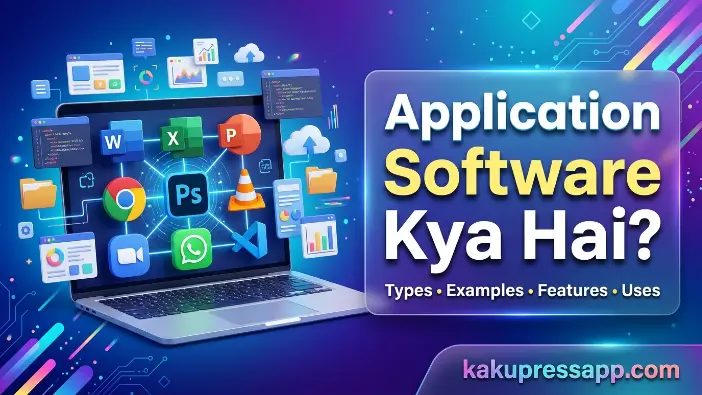
If you’ve ever wondered what application software kya hai, you’re in the right place. Application software is one of the most important parts of any computer or mobile device because it allows users to perform specific tasks such as writing documents, browsing the internet, editing photos, attending online meetings, or managing business records.
You’ll learn about application software in simple English. We’ll cover its definition, types, features, examples, uses, advantages, disadvantages, and the difference between application software and system software. Whether you’re a student, a beginner, or preparing for competitive exams, application software kya hai?
Application software kya hai?
Application Software Kya Hai is one of the most common questions asked by beginners learning about computers. Application software is a type of software designed to help users perform specific tasks such as writing documents, browsing the internet, editing photos, watching videos, managing business data, or communicating online. Unlike system software, which controls the computer’s hardware and operating system, application software focuses on completing user-oriented tasks. In simple terms, whenever you use programs like Microsoft Word, Google Chrome, or WhatsApp, you are using application software, also known as user software or end-user software.
Definition of Application Software Kya Hai
The answer to Application Software Kya Hai is simple: it is a computer program created to perform one or more specific tasks for the user. These programs run on top of an operating system and help users complete everyday activities efficiently. Whether you need to prepare a presentation, edit a video, browse websites, or manage business records, application software provides the necessary tools to accomplish those tasks.
Unlike system software, which is responsible for managing hardware resources and ensuring the computer operates correctly, application software directly interacts with the user. It is developed to improve productivity, simplify daily work, and provide solutions for education, entertainment, communication, healthcare, finance, and many other fields. Popular examples include Microsoft Word, Google Chrome, Adobe Photoshop, Zoom, and VLC Media Player.
Simple Explanation of Application Software Kya Hai
A simple way to understand Application Software Kya Hai is to think of your computer as a workplace. The operating system acts like the building’s infrastructure, while application programs are the tools you use to complete different jobs. Without the operating system, applications cannot run, but without application software, you would not be able to perform useful tasks on your device.
For example, Windows or macOS manages your computer’s hardware, but if you want to write a report, you open Microsoft Word. If you want to search for information, you use Google Chrome. To watch a movie, you use VLC Media Player, and to edit images, you might use Adobe Photoshop. Each software application is designed with a specific purpose, making your work faster, easier, and more efficient.
Real-Life Example of Application Software Kya Hai
Imagine you are working on a college assignment. First, you use Google Chrome to research information online. Next, you prepare your report using Microsoft Word and create attractive graphics in Canva. If your reference material is in PDF format, you can open it using Adobe Acrobat Reader. Finally, you send the completed assignment to your teacher through Gmail. Each of these programs is an example of application software because it performs a specific function.
The same concept applies in professional workplaces. A graphic designer uses Adobe Photoshop for image editing, an accountant uses Tally Prime to manage financial records, and a business team conducts virtual meetings through Zoom. These examples show how application software examples help people complete different tasks efficiently, making computers valuable tools in everyday life.
Read Also: software kise kahate hain
Types of Application Software Kya Hai
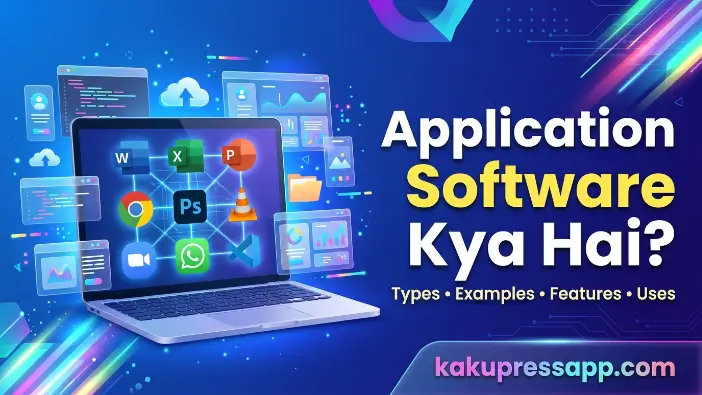
To fully understand Application Software Kya Hai, it’s important to know that application software is available in different types, each designed to perform specific tasks. Some applications are built for general daily use, while others are developed for businesses, education, communication, or creative work. Choosing the right application software depends on your requirements, whether you’re a student, professional, business owner, or casual user.
General Purpose Software
General-purpose software refers to application software that is designed for everyday computing tasks. These programs are suitable for almost every user because they perform common activities such as creating documents, preparing spreadsheets, making presentations, browsing the internet, and playing media files. They are easy to use and are commonly installed on personal computers, laptops, and mobile devices.
Popular examples of General Purpose Software include Microsoft Word, Microsoft Excel, Microsoft PowerPoint, Google Chrome, Mozilla Firefox, and VLC Media Player. These general-purpose applications improve productivity by helping users complete routine tasks quickly and efficiently. Since they are versatile and user-friendly, they are among the most widely used types of application software.
Customized Software
Customized Software is developed to meet the specific needs of an individual, company, organization, or institution. Unlike ready-made software, these custom application software solutions are tailored to perform unique functions that standard software cannot handle. They are designed after understanding the exact requirements of the client.
Examples of Customized Software include Hospital Management Systems, School Management Systems, Hotel Booking Systems, Library Management Systems, and ERP solutions. These customized applications help organizations automate their operations, manage records accurately, improve efficiency, and reduce manual work, making them essential for modern businesses.
Business Software
Business Software is a type of application software created to simplify and manage business operations. It helps organizations handle accounting, billing, payroll, inventory management, customer records, and financial reporting. By automating routine processes, business software saves time and increases overall productivity.
Common examples include Tally Prime, Zoho Books, QuickBooks, SAP ERP, and Busy Accounting Software. These business applications are widely used by small businesses, startups, and large enterprises to improve accuracy, monitor finances, and make informed business decisions based on real-time data.
Educational Software
Educational Software is specifically designed to support teaching, learning, and skill development. This type of learning software provides interactive lessons, online classes, quizzes, assignments, and digital learning resources that make education more engaging and accessible for students of all ages.
Popular examples include Google Classroom, Khan Academy, Duolingo, Microsoft Teams for Education, and BYJU’S. These educational applications allow students to learn at their own pace while helping teachers manage classrooms, distribute assignments, and evaluate student performance more effectively.
Multimedia Software
Multimedia Software is used to create, edit, and manage digital content such as images, videos, audio, animations, and graphics. This category of multimedia application software is widely used by graphic designers, photographers, video editors, content creators, and marketing professionals.
Examples include Adobe Photoshop, Adobe Premiere Pro, Canva, CorelDRAW, Audacity, and VLC Media Player. These media editing software programs provide advanced tools for designing graphics, editing videos, enhancing photographs, creating presentations, and producing high-quality digital content for personal and professional use.
Communication Software
Communication Software enables users to connect and communicate with others through text messages, voice calls, video conferences, and file sharing over the internet. These communication applications have become essential for personal conversations, remote work, online education, and business collaboration.
Some of the most popular communication software includes WhatsApp, Zoom, Google Meet, Microsoft Teams, Skype, and Telegram. These online communication tools allow individuals and organizations to collaborate in real time, making remote communication faster, easier, and more efficient regardless of location.
Entertainment Software
Entertainment Software is designed to provide users with digital entertainment through music, movies, video streaming, gaming, and other interactive content. This type of entertainment application software is widely used on computers, smartphones, smart TVs, and gaming consoles.
Popular examples include YouTube, Netflix, Spotify, Steam, Disney+, and MX Player. These entertainment applications offer users unlimited access to movies, TV shows, songs, podcasts, live streams, and games, making them one of the most frequently used categories of application software in everyday life.
Features of Application Software Kya Hai
Understanding the features of Application Software Kya Hai is essential because these characteristics explain why application software is widely used in homes, schools, businesses, and organizations. Unlike system software, application software is designed to perform user-specific tasks while providing a simple, efficient, and interactive experience. Its practical features make it an indispensable part of modern computing, helping users complete their daily work quickly and effectively.
Main Characteristics of Application Software Kya Hai
Every application software is developed with certain features that make it useful for specific tasks. Although different applications have different purposes, they share several common characteristics that improve usability, performance, and productivity. These features ensure that users can perform their work with greater accuracy and convenience.
Whether you’re using computer applications for education, business, entertainment, or communication, these characteristics make the software easy to understand and efficient to operate. Below are the most important features of application software.
User-Friendly
One of the biggest strengths of application software is its user-friendly interface. Most applications are designed with simple menus, icons, and buttons so that users can navigate them without technical expertise.
A beginner can easily learn how to use software like Microsoft Word or Google Chrome because developers focus on creating an intuitive experience. This reduces the learning curve and allows users to complete tasks more efficiently.
Task-Specific
Application software is developed to perform a particular task instead of managing the entire computer system. Every application is created with a specific purpose, making it more effective for that job.
For example:
- Microsoft Word: Designed for creating, editing, and formatting documents. It provides tools like spell check, templates, and formatting options to make document creation simple and professional.
- Adobe Photoshop: Built specifically for image editing and graphic design. It includes advanced tools for photo retouching, color correction, and digital artwork creation.
- Zoom: Developed for online meetings and video conferencing. It offers features such as screen sharing, virtual backgrounds, and live collaboration for remote communication.
Easy Installation
Most software applications are designed with a simple installation process, allowing users to install them without advanced technical knowledge. Many applications also provide automatic setup wizards that guide users through each installation step.
For example:
- Microsoft Office can be installed by following a guided installer that automatically configures the required settings on your computer.
- Google Chrome: Downloads and installs within a few minutes with minimal user interaction, making it convenient for beginners.
- Mobile Apps: Applications from the Google Play Store or Apple App Store can usually be installed with a single tap, making the process fast and effortless.
Fast Processing
Modern application software is optimized to process tasks quickly and efficiently. Developers regularly improve software performance so users can complete their work without unnecessary delays.
For example:
- Microsoft Excel: Processes large spreadsheets, formulas, and calculations within seconds, even when handling thousands of data entries.
- VLC Media Player: Opens and plays high-quality video and audio files smoothly while consuming minimal system resources.
- Google Chrome: Loads web pages rapidly and efficiently manages multiple browser tabs, improving the overall browsing experience.
GUI-Based
Most application software uses a Graphical User Interface (GUI), allowing users to interact with the software through windows, icons, menus, and buttons instead of typing complicated commands.
For example:
- Microsoft PowerPoint lets users create presentations by clicking on visual tools, inserting images, and dragging objects without writing any code.
- Canva provides a drag-and-drop interface that enables users to design posters, social media graphics, and presentations easily.
- WhatsApp Desktop allows users to send messages, make calls, and share files through a clean graphical interface, making communication simple and user-friendly.
Uses of Application Software Kya Hai
Understanding the practical uses of Application Software Kya Hai helps us see why it has become an essential part of everyday life. From managing personal tasks to running large organizations, application software is used in almost every industry. Whether you’re studying, working, shopping, communicating, or managing finances, different software applications help complete these activities more efficiently, accurately, and conveniently.
Home Use
At home, application software helps users perform a wide range of daily activities, making computers and smartphones more useful for personal needs. People use different applications to browse the internet, watch movies, listen to music, manage personal documents, communicate with family, and even shop online.
For example, Google Chrome is used for web browsing, VLC Media Player is used to play videos, WhatsApp helps people stay connected through messages and calls, while Microsoft Word allows users to create letters, resumes, and other personal documents. These applications save time and make everyday tasks much easier.
Education
The education sector heavily relies on educational application software to improve teaching and learning experiences. Students can attend online classes, complete assignments, access digital study materials, and learn new skills using specialized educational platforms.
Applications like Google Classroom, Microsoft Teams, Zoom, Khan Academy, and Duolingo provide interactive learning environments for students and teachers. These learning applications make education more accessible, flexible, and engaging, especially for remote and online learning.
Office
In offices, application software is used to improve productivity, organize information, and simplify daily work. Employees use different applications to prepare reports, manage spreadsheets, create presentations, schedule meetings, and communicate with team members.
Software such as Microsoft Word, Microsoft Excel, Microsoft PowerPoint, Outlook, and Google Workspace enables organizations to perform administrative tasks efficiently. These office productivity applications help businesses reduce manual work, improve collaboration, and increase overall efficiency.
Healthcare
The healthcare industry uses application software to manage patient records, schedule appointments, generate medical reports, and improve communication between doctors and patients. Digital applications have significantly enhanced the speed and accuracy of healthcare services.
Hospital Management Systems, Electronic Health Record (EHR) software, pharmacy management applications, and telemedicine platforms help healthcare professionals provide better patient care. These healthcare applications reduce paperwork, improve data management, and support faster medical decision-making.
Banking
Banks and financial institutions depend on banking application software to manage customer accounts, process transactions, monitor financial activities, and provide secure online banking services. These applications ensure fast, reliable, and secure financial operations.
Customers use mobile banking apps and internet banking platforms to transfer money, pay utility bills, check account balances, and manage investments. Meanwhile, banks use advanced financial software to detect fraud, maintain transaction records, and deliver efficient customer service.
Business
Businesses use application software to automate operations, manage customer relationships, monitor inventory, track sales, and analyze financial performance. Different departments rely on specialized software to improve efficiency and support informed decision-making.
Popular business applications such as Tally Prime, SAP ERP, Zoho Books, QuickBooks, and Customer Relationship Management (CRM) software help organizations streamline daily operations. These business management applications increase productivity, reduce operational costs, improve data accuracy, and contribute to long-term business growth.
Advantages of Application Software Kya Hai
Understanding the advantages of Application Software Kya Hai helps users see why it is an essential part of modern computing. Application software makes everyday tasks easier, improves productivity, and enhances the overall user experience. Some of its key advantages are:
- Easy to Use: Features a simple and user-friendly interface, making it suitable for both beginners and professionals.
- Increases Productivity: Automates repetitive tasks, helping users complete work faster and more efficiently.
- Task-Specific: Designed to perform specific tasks such as document editing, accounting, or graphic design.
- Saves Time: Completes complex tasks quickly, reducing manual effort and improving workflow.
- Improves Accuracy: Built-in tools like spell check and automatic calculations help minimize errors.
- Better Communication: Applications such as WhatsApp and Zoom make messaging, video calls, and collaboration easy.
- Supports Education: Provides online learning platforms, virtual classrooms, and digital study resources.
- Simplifies Business: Helps manage accounting, inventory, payroll, and customer relationships efficiently.
- Regular Updates: Receive security patches, bug fixes, and new features through software updates.
- Cross-Platform Compatibility: Many applications work on computers, smartphones, and tablets, allowing easy access across devices.
Disadvantages of Application Software Kya Hai
Although Application Software Kya Hai offers many benefits, it also has some limitations that users should consider. Application software may involve costs, security concerns, compatibility issues, and performance challenges. Understanding these disadvantages helps users choose and use software more effectively.
- High Cost: Many professional applications require a paid license or subscription, which can be expensive for some users.
- Compatibility Issues: Some software may not work properly on all operating systems or devices without specific requirements.
- Consumes System Resources: Advanced applications often use more RAM, storage, and CPU power, which can slow down older computers.
- Security Risks: Downloading software from untrusted sources can expose your device to viruses, malware, and data theft.
- Requires Regular Updates: Frequent updates are necessary to fix bugs, improve security, and add new features.
- Internet Dependency: Many modern applications require a stable internet connection to access cloud-based features and online services.
- Learning Curve: Professional software often includes advanced features that may require time and practice to learn effectively.
Difference Between Application Software Kya Hai and System Software
To fully understand Application Software Kya Hai, it is important to compare it with system software. Although both are essential for a computer to function properly, they serve completely different purposes. System software manages the computer’s hardware and provides the platform on which other programs run, whereas application software is designed to help users perform specific tasks such as creating documents, browsing the internet, editing images, or managing business operations. In simple terms, system software makes the computer work, while application software helps users complete their work.
| Basis | Application Software | System Software |
| Purpose | Designed to help users perform specific tasks such as writing documents, editing images, or browsing the internet. | Designed to manage computer hardware, system resources, and provide a platform for other software. |
| Primary Function | Focuses on completing user-oriented tasks efficiently. | Controls the overall operation of the computer system. |
| User Interaction | Users interact directly with application software to perform their work. | Users rarely interact directly with system software during normal computer usage. |
| Dependency | Requires system software to run properly. | Can operate independently and is required before application software can function. |
| Installation | Installed according to the user’s needs and preferences. | Usually installed during the operating system setup or by the computer manufacturer. |
| Execution | Runs only when the user opens or uses the application. | Starts automatically when the computer is turned on and continues running in the background. |
| Examples | Microsoft Word, Google Chrome, Adobe Photoshop, Zoom, VLC Media Player, and Canva. | Windows, macOS, Linux, Android, iOS, Device Drivers, BIOS. |
| Resource Management | Does not directly manage hardware resources. | Manages CPU, memory, storage, input/output devices, and other hardware components. |
| Failure Impact | If an application fails, only that specific task or program is affected. | If system software fails, the entire computer may stop working or fail to boot. |
| Main Users | Students, professionals, businesses, designers, and general computer users. | Primarily used by the operating system and the computer itself to manage resources. |
Common Mistakes While Using Application Software Kya Hai
While using Application Software Kya Hai, many users unknowingly make mistakes that can affect their computer’s performance, security, and data safety. Even the best application software cannot perform efficiently if it is used incorrectly. Following good software practices not only improves productivity but also protects your device from security threats and unexpected data loss. Below are some of the most common mistakes users should avoid.
- Using Pirated Software: Installing cracked or pirated software may save money initially, but it often contains malware, viruses, or hidden security risks. For example, downloading a pirated version of Microsoft Office from an unofficial website can compromise your personal data.
- Ignoring Software Updates:
Many users avoid updating their applications, which leaves them vulnerable to bugs and cyberattacks. For example, running an outdated version of Google Chrome may expose your system to known security vulnerabilities. - Using Weak Passwords:
Creating simple passwords like “123456” or “password” makes your accounts easy to hack. Always use strong, unique passwords and enable two-factor authentication whenever possible. - Not Backing Up Important Data:
Failing to create backups can result in permanent data loss if the software crashes or the device fails. For example, losing an unsaved project due to a system error can waste hours of valuable work.
Frequently Asked Questions
Application software kya hai Kya Hai?
Application Software Kya Hai refers to software that is designed to help users perform specific tasks on a computer or mobile device. Examples include Microsoft Word, Google Chrome, Adobe Photoshop, WhatsApp, and VLC Media Player. These application programs make everyday activities such as writing, browsing, editing, and communication easier and more efficient.
What Are the Main Types of Application Software?
The main types of application software include general-purpose software, customized software, business software, educational software, multimedia software, communication software, and entertainment software. Each type is designed to perform specific functions based on the user’s needs.
What Is the Difference Between Application Software and System Software?
System software manages the computer’s hardware and operating system, while application software helps users perform specific tasks such as creating documents, browsing the internet, or editing images. In simple terms, system software runs the computer, and application software helps users complete their work.
What Are Some Common Examples of Application Software?
Popular examples of application software include Microsoft Word, Microsoft Excel, Google Chrome, Adobe Photoshop, Canva, Zoom, WhatsApp, VLC Media Player, Tally Prime, and Google Meet. These applications are widely used for education, business, communication, and entertainment.
Why Is Application Software Important?
Application software is important because it allows users to perform everyday tasks quickly and efficiently. It improves productivity, saves time, supports communication, enhances learning, simplifies business operations, and makes computers useful for personal and professional purposes.
Can Application Software Run Without System Software?
No. Application software cannot function without system software. An operating system such as Windows, macOS, Linux, or Android provides the platform and resources required for application software to run properly.
Conclusion
Understanding Application Software Kya Hai is essential for anyone who wants to use computers or mobile devices effectively. Application software is designed to help users perform specific tasks such as creating documents, browsing the internet, editing photos, managing business operations, attending online classes, and communicating with others. From students and professionals to businesses and organizations, application software plays a vital role in improving productivity, saving time, and simplifying everyday work.
We explored the definition, types, features, uses, advantages, disadvantages, common mistakes, and the difference between application software and system software. We also discussed practical examples to help you understand how these applications are used in real life. By choosing reliable software, keeping it updated, and following safe usage practices, you can make the most of software applications while protecting your data and ensuring a smooth user experience.
