
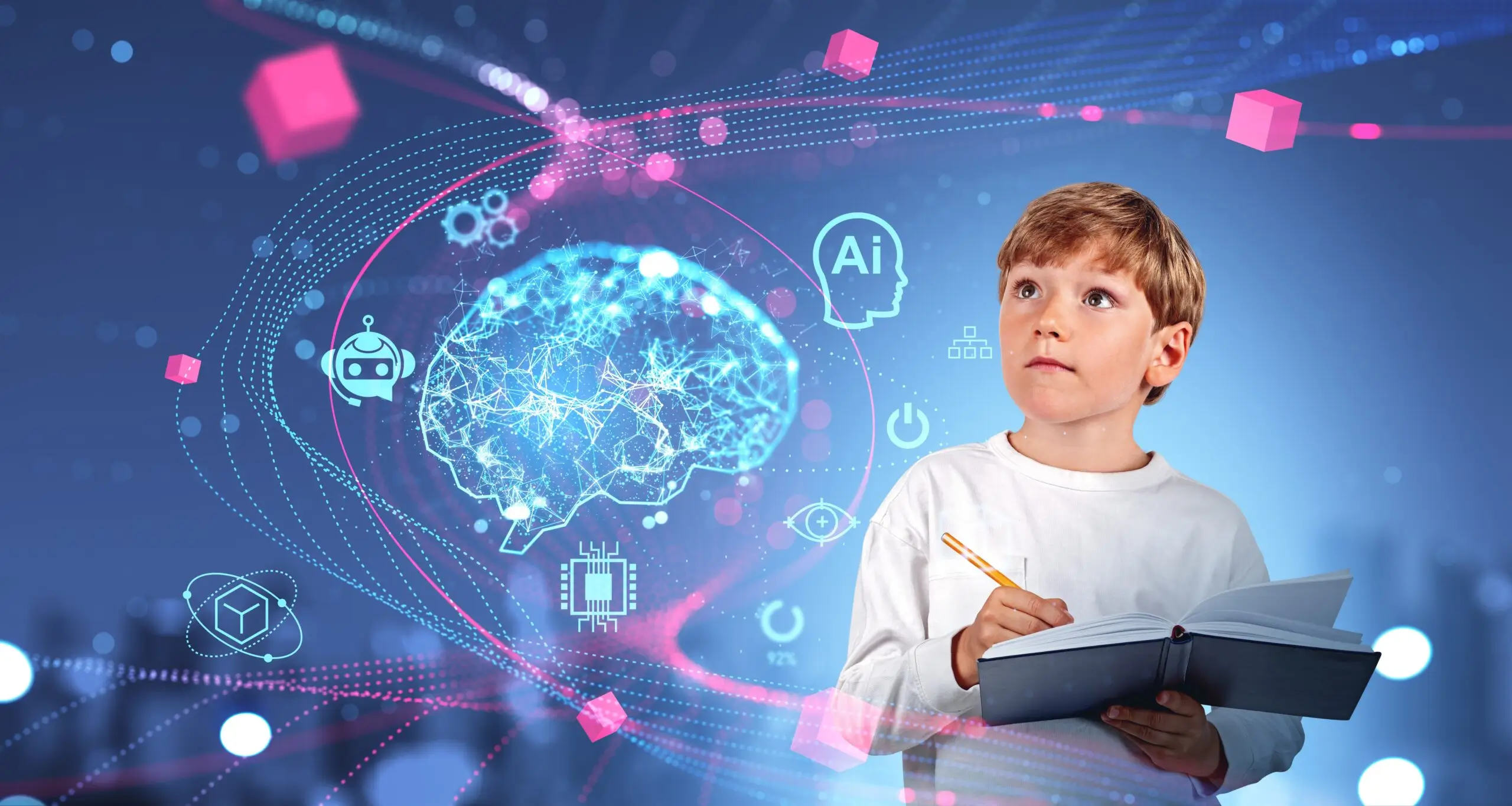
The landscape of education is shifting beneath our feet. If you walked into a college library ten years ago, you would see students buried under towers of physical textbooks, frantically highlighting pages. Today, that scene has been replaced by the soft glow of laptop screens and the quiet hum of high-speed Wi-Fi. We are living in a transition period where the traditional “homework” model is evolving into something far more complex and integrated.
As we look toward the future, two major forces are shaping how students learn: the rapid rise of Artificial Intelligence and the enduring value of human-to-human expert mentorship. Balancing these two is the secret to staying ahead in a competitive academic world.
The AI Revolution: More Than Just a Search Engine
Artificial Intelligence has moved far beyond being a gimmick. For a 12th-grade student or a college freshman, AI acts as a 24/7 personal tutor. Tools can now summarize dense chapters, generate practice quiz questions, and even help debug code in seconds.
However, there is a catch. While AI is incredibly fast, it often lacks the “soul” of deep analysis. It can tell you what happened in a historical event, but it might struggle to explain the subtle cultural nuances that a human professor would catch. This is why the future of research isn’t just about using AI—it’s about knowing how to fact-check and refine what the machine produces.
Why Speed Isn’t Always Success
Many students make the mistake of thinking that finishing a paper in ten minutes using a chatbot is a win. In reality, academic success is built on critical thinking. If you don’t engage with the material, you won’t be able to discuss it during an exam or apply it in a future job. The smart way to use technology is as a “brainstorming partner” rather than a “ghostwriter.”
The Resurgence of Expert Mentorship
Despite the digital surge, the demand for human expertise is higher than ever. Why? Because a machine can’t offer empathy or career-specific wisdom. When a student is stuck on a complex thesis, they don’t just need a list of facts; they need a strategy.
This is where specialized academic assistance becomes a game-changer. Connecting with a mentor who has years of experience in a specific field allows a student to see the “big picture.” A mentor can tell you which sources are credible and which are outdated, helping you navigate the noise of the internet.
Bridging the Knowledge Gap
In many schools, teachers are stretched thin, managing hundreds of students at once. It is nearly impossible for them to give every student the one-on-one time required for a deep dive into a topic. Expert mentorship fills this gap, providing the personalized feedback that is often missing in a standard classroom setting.
Mastering Modern Research Techniques
Research is no longer about finding information; it’s about filtering it. We are currently drowning in data. The challenge for today’s student is distinguishing between a peer-reviewed study and a well-designed blog post that might contain misinformation.
When you are tasked with a major project, the stakes are high. This is particularly true for high-level university work. Many students find that seeking professional research paper writing help is the most effective way to learn the ropes. By looking at how an expert structures an argument, cites sources, and formats a bibliography, a student can improve their own writing skills for the long term.
The Anatomy of a Modern Research Paper
A great research paper today needs to be:
- Data-Driven: Utilizing the latest statistics and trends.
- Interdisciplinary: Showing how a topic (like Economics) affects another (like Climate Change).
- Ethically Produced: Clearly stating where AI was used and ensuring all human sources are credited.
Homework in 2026: A Hybrid Approach
What does a typical homework session look like in the near future? It’s a hybrid model.
- Phase One: Discovery. A student uses AI to find broad topics and organize their initial thoughts.
- Phase Two: Deep Dive. The student visits digital archives and libraries to find specific primary sources.
- Phase Three: Collaboration. The student consults with a mentor or an expert to ensure their logic is sound and their “voice” is unique.
This triple-threat approach ensures that the work is efficient, accurate, and original. It moves homework away from being a “chore” and turns it into an “exploration.”
Overcoming the “Blank Page” Syndrome
We’ve all been there—staring at a blinking cursor for an hour, unsure of how to start. The future of education aims to eliminate this anxiety. With the combination of smart outlines and expert coaching, the “blank page” is becoming a thing of the past.
Modern tools can help you create a roadmap, but the human element is what drives the car. Whether you are struggling with a lab report or a creative essay, the goal is to build a workflow that feels natural and sustainable. Stress levels go down when you know you have a support system—both digital and human—to lean on.
Conclusion
The future of homework and research isn’t a battle between humans and machines. It’s a partnership. AI provides the speed and the data, while expert mentors provide the context, ethics, and critical thinking.
As you move forward in your academic journey, don’t be afraid to use the tools at your disposal. Embrace the efficiency of technology, but never lose sight of the value of human expertise. By combining the two, you aren’t just completing assignments—you are mastering your field.
