
Welcome to kakupressapp In the modern digital age, social media has become an essential part of both personal and professional life. Whether for networking, marketing, or staying informed, social media platforms can consume a significant portion of our daily schedules. Time management tips for avoiding social media burnout are therefore essential to maintaining productivity, mental health, and overall well-being. By understanding how to organize our social media usage efficiently, we can enjoy the benefits of digital engagement without experiencing fatigue or stress.
Social media burnout is not just about feeling tired; it is a state of emotional, mental, and physical exhaustion caused by prolonged and unbalanced use of digital platforms. For professionals, content creators, and casual users alike, recognizing the signs and implementing strategic time management practices can transform the way social media affects our lives.
“Managing your time effectively on social media is not about limiting your usage; it is about controlling your focus, priorities, and energy to prevent burnout.”
Understanding Social Media Burnout
Before exploring time management strategies, it is crucial to understand what social media burnout is and why it occurs. Social media burnout arises when the constant consumption, creation, or monitoring of content overwhelms our mental capacity.
Read Also: Securly eHallPass The Future of Digital Hall Pass Management in Schools
Causes of Social Media Burnout
Several factors contribute to social media burnout:
Information Overload
Social media platforms provide a continuous stream of information, notifications, and updates. When users are unable to filter this content effectively, the brain becomes overstimulated, leading to stress and fatigue.
Comparison and Anxiety
Frequent exposure to other people’s highlights, achievements, or curated content can cause feelings of inadequacy, low self-esteem, and anxiety. This is particularly common on visually-driven platforms.
Lack of Boundaries
Without defined time limits, users often spend excessive hours on social media, disrupting sleep, work, and personal routines.
Pressure to Perform
Professionals, influencers, and social media managers may feel compelled to post consistently, respond immediately, or track engagement metrics constantly, which can lead to chronic stress.
Multitasking Across Platforms
Switching between multiple social networks, responding to messages, and checking notifications repeatedly can deplete cognitive resources and reduce productivity.
“Social media burnout is a silent drain on your creativity and productivity, often hidden behind a screen full of endless scrolling.”
Signs You May Be Experiencing Social Media Burnout
Recognizing social media burnout is the first step toward prevention. Common signs include:
- Feeling anxious or stressed after using social media.
- Reduced motivation to create or engage with content.
- Mental fatigue and difficulty concentrating on tasks.
- Physical symptoms such as eye strain, headaches, or sleep disturbances.
- Emotional detachment from online communities or previously enjoyable activities.
By identifying these indicators early, users can apply time management strategies proactively instead of reactively addressing the consequences of burnout.
Time Management Strategies to Prevent Social Media Burnout
Effective time management is the cornerstone of preventing social media burnout. Implementing structured routines and mindful habits ensures balanced engagement without compromising mental health.
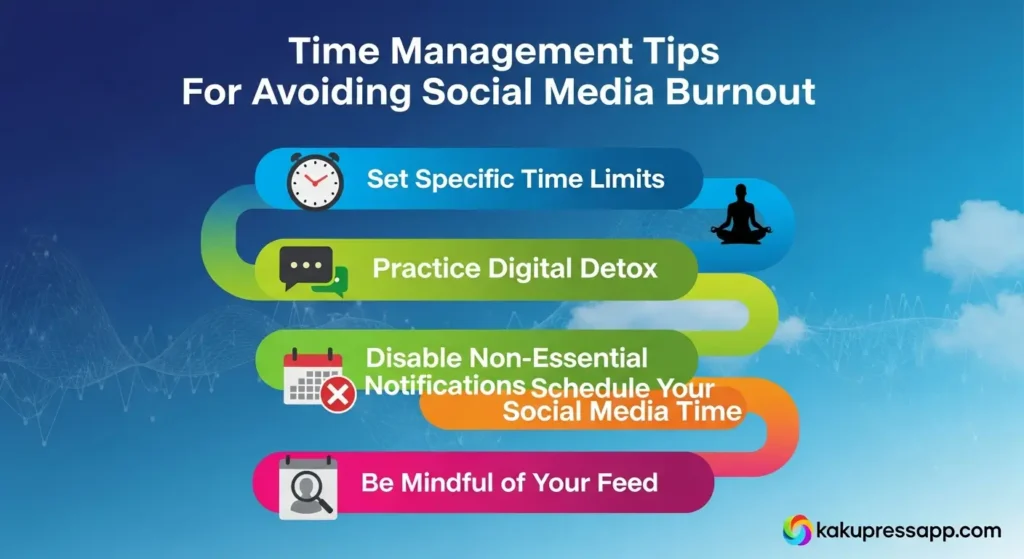
Schedule Social Media Time
Creating a clear schedule for social media usage is essential. Assign specific periods of the day for checking platforms, responding to messages, and posting content. For instance, limiting social media access to morning and evening slots can significantly reduce stress and mindless scrolling.
Practical Tips:
- Use calendar apps or alarms to block time for social media.
- Avoid checking notifications outside of scheduled periods.
- Treat social media sessions as structured tasks rather than spontaneous habits.
“A well-planned schedule transforms social media from a time drain into a productive tool.”
Prioritize Tasks and Content
Prioritization allows users to focus on essential activities while avoiding unnecessary stress. For professionals, this could mean identifying high-impact posts or urgent messages, while casual users might prioritize personal connections over random browsing.
Methods to Prioritize:
- Use the Eisenhower Matrix to separate tasks into urgent, important, or non-essential.
- Determine which platforms contribute most to your goals and allocate more time accordingly.
- Batch similar tasks together, such as creating multiple posts or responding to messages in one session.
Batch Content Creation
Batching involves completing multiple related tasks in a single session, reducing cognitive load and decision fatigue. Social media managers often use batching to create content calendars, captions, or visual posts in one go.
Benefits of Content Batching:
- Saves time by reducing the constant task-switching that leads to mental exhaustion.
- Ensures consistent posting schedules without the pressure of daily creation.
- Increases creativity by allowing focused thinking during content sessions.
“Batching content not only saves time but also preserves mental energy for higher-value tasks.”
Implement Time Blocking
Time blocking is a technique where specific blocks of time are allocated to focused tasks. Users can dedicate morning hours to professional tasks, afternoon to content creation, and evening to personal browsing.
How to Use Time Blocking Effectively:
- Assign fixed durations for each platform or task.
- Include buffer periods to prevent overlap and allow for unexpected interruptions.
- Pair time blocks with breaks to maintain mental clarity.
Limit Multitasking
Multitasking across platforms can deplete energy and reduce focus. Instead, handle one task at a time. For example, respond to all messages first before reviewing analytics or posting new content.
Practical Suggestions:
- Close unnecessary tabs and notifications.
- Focus on one social network during each time block.
- Use apps that help maintain single-tasking by restricting access to multiple platforms simultaneously.
“Single-tasking is the antidote to social media burnout, ensuring both productivity and mental calm.”
Utilize Automation Tools
Automation tools can significantly reduce the manual workload associated with social media management. Scheduling posts and automating responses to routine inquiries allow users to maintain a presence online without constant monitoring.
Examples of Automation Techniques:
- Use scheduling software to plan posts weeks in advance.
- Set automated replies for frequently asked questions.
- Track analytics through dashboards that update without manual intervention.
Establish Digital Boundaries
Setting boundaries is critical to prevent overexposure and maintain mental health. Digital boundaries ensure that social media does not intrude into personal time, sleep, or offline activities.
Ways to Establish Boundaries:
- Turn off push notifications after work hours.
- Avoid checking social media first thing in the morning or right before bed.
- Communicate boundaries to colleagues or team members regarding response times.
Take Digital Detox Breaks
Regular breaks from screens are essential for mental recovery. Digital detoxes, even as short as a few hours or a single day, can refresh focus and reduce stress.
Tips for Effective Detox:
- Schedule a weekly social media-free day.
- Engage in offline hobbies such as reading, exercise, or creative activities.
- Use device-free zones in the home, like bedrooms or dining areas, to limit screen exposure.
“Time away from social media is time spent reconnecting with yourself, your goals, and the world around you.”
Practice Mindful Social Media Use
Mindfulness in social media usage involves conscious engagement, intention setting, and self-awareness. Users should ask themselves why they are logging in and what value they aim to gain.
Strategies for Mindful Use:
- Set specific goals for each session, such as posting a status update or checking a professional feed.
- Avoid aimless scrolling by turning off auto-play features and limiting video consumption.
- Reflect on emotional responses during and after social media sessions to identify triggers of stress or anxiety.
Maintain Self-Care Routines
Time management for social media burnout is not only about scheduling but also about supporting overall well-being. Prioritizing physical, mental, and emotional health enhances resilience to stress.
Key Self-Care Practices:
- Sleep adequately to improve cognitive function and reduce fatigue.
- Exercise regularly to maintain energy levels and reduce stress.
- Incorporate relaxation techniques like meditation or deep breathing to manage digital stress.
Tools and Apps to Support Time Management
Using technology wisely can help manage social media efficiently. Here are some categories and examples of tools:
| Tool Category | Purpose | Example Applications |
| Scheduling | Plan posts in advance | Buffer, Hootsuite, Later |
| Analytics | Track engagement | Sprout Social, Iconosquare |
| Focus & Productivity | Reduce distractions | Forest, Freedom, Cold Turkey |
| Automation | Handle routine tasks | Zapier, IFTTT |
| Mindfulness | Encourage intentional use | Moment, Screen Time |
Common Mistakes That Lead to Social Media Burnout
Even with the best intentions, users may fall into habits that increase the risk of burnout. Avoid these mistakes:
Excessive multitasking – Trying to manage multiple platforms simultaneously.
Ignoring mental health cues – Overlooking signs of stress or fatigue.
Inconsistent scheduling – Posting randomly without structure or purpose.
Chasing validation – Focusing excessively on likes, comments, or shares.
Neglecting offline life – Allowing social media to replace real-world interactions.
“Preventing social media burnout is not about avoiding platforms; it is about using them purposefully, efficiently, and consciously.”
Actionable Daily Routine to Avoid Burnout
Implementing the above strategies requires consistent practice. Here is a sample daily routine:
Morning:
- Check professional accounts for urgent messages.
- Post or schedule content for the day.
- Limit casual browsing.
Afternoon:
- Respond to comments or engagement.
- Monitor analytics if relevant.
- Take a short break away from screens.
Evening:
- Review the day’s activities.
- Set goals for the next day.
- Turn off notifications and engage in offline activities.
Weekly:
- Conduct a digital detox day.
- Plan content for the upcoming week.
- Reflect on emotional responses to social media use.
Frequently Asked Questions (FAQs)
What is social media burnout?
Social media burnout is a state of mental, emotional, and physical exhaustion caused by prolonged and excessive use of social media platforms. It can result in fatigue, stress, anxiety, and decreased productivity, often triggered by constant scrolling, content creation pressures, and online comparison.
How can time management prevent social media burnout?
Effective time management helps by scheduling specific periods for social media, prioritizing tasks, batching content creation, and setting clear boundaries. These strategies reduce mindless scrolling, minimize stress, and create a balanced approach to online engagement.
How long should I spend on social media daily?
The ideal duration varies depending on personal or professional needs, but limiting usage to scheduled sessions totaling 1–2 hours per day can prevent overload and maintain productivity while still staying connected.
What are some signs of social media burnout?
Common signs include constant fatigue, anxiety after using social media, reduced motivation to engage, difficulty concentrating, and physical symptoms like headaches or disrupted sleep. Emotional detachment and irritability are also indicators.
What is content batching, and how does it help?
Content batching is the practice of creating multiple social media posts or tasks in one dedicated session. It reduces decision fatigue, improves workflow efficiency, and ensures consistent posting without daily stress.
Should I take breaks from social media?
Yes, regular breaks or digital detoxes are essential. Short breaks throughout the day or occasional full-day detoxes help recharge the mind, reduce stress, and restore focus and creativity.
How can I practice mindful social media use?
Mindful use involves setting intentions before logging in, focusing on meaningful interactions, avoiding aimless scrolling, and reflecting on emotional responses. This practice helps maintain control over online habits and prevents unnecessary stress.
Can automation tools help prevent burnout?
Automation tools like scheduling apps, analytics dashboards, and automated replies reduce manual workload. They allow users to maintain an online presence efficiently without constant monitoring, which minimizes fatigue.
How can I set digital boundaries effectively?
Digital boundaries include turning off notifications outside work hours, limiting social media usage in certain spaces, and communicating response expectations to colleagues or followers. Boundaries protect mental health and personal time.
Does multitasking on social media cause burnout?
Yes, multitasking between multiple platforms and tasks increases cognitive load and reduces focus. Single-tasking or time-blocking on each platform ensures more productive and less stressful social media use.
Conclusion
In today’s digitally connected world, social media is both a valuable tool and a potential source of stress. Time management tips for avoiding social media burnout provide practical strategies to maintain balance, productivity, and mental well-being. By scheduling usage, prioritizing tasks, batching content creation, and setting clear boundaries, users can engage meaningfully without feeling overwhelmed. Incorporating mindful practices, regular breaks, and self-care routines further strengthens resilience against fatigue and anxiety. Consistent application of these techniques allows social media to serve as a purposeful resource rather than a source of stress. Ultimately, effective time management transforms online engagement into a sustainable, rewarding experience.
